

Sea Turtle Conservation and Reef Restoration
Volunteers on this wonderful project participate in both coral reef restoration and sea turtle conservation.
Sea turtles are keystone species in the preservation of marine biodiversity. Their role across multiple ecosystems—such as seagrass beds, coral reefs, and open oceans—makes their survival essential to maintaining ecological balance.
Unfortunately, sea turtles face numerous threats, including climate change, bycatch in fisheries and habitat destruction. Coastal development and pollution reduce safe nesting sites. Protecting sea turtles is not only about saving a single species, but about safeguarding the health and stability of entire ocean ecosystems.
This program also concentrates on reef restoration. Coral reefs are among the most vital underwater ecosystems on our planet. Although they cover less than 1% of the world’s oceans, they support nearly 25% of all marine biodiversity, providing habitat, food, and breeding grounds for countless species.
In recent years, efforts have been made to protect and restore these fragile ecosystems. Now that dynamite fishing has stopped, restoration initiatives are helping reefs begin their recovery. Dynamite fishing, which severely damages reef structures, has had a devastating impact—particularly along the southern coast of Tanzania—leaving behind vast areas of coral rubble.
Protecting coral reefs is not only critical for marine life but also for coastal communities that rely on them for food security, tourism, and shoreline protection.
Goals of this Project:
- Rehabilitate reefs damaged by dynamite fishing.
- Safeguard key species, including sea turtles, that play essential ecological roles.
- Protect nesting beaches and feeding grounds.
- Support turtle population recovery through monitoring and community engagement.
- Raise awareness about marine conservation in the local community.
How You Can Help
Volunteers on this project help to restore and protect marine ecosystems along the southern coast of Tanzania through a combination of active reef rehabilitation, environmental education, and community engagement. By maintaining a minimum of three scuba diving days per week, the project ensures continuous progress in coral reef restoration. Activities such as coral nursery maintenance, coral transplantation, monitoring of planted colonies, underwater clean-ups, and participation in citizen science initiatives contribute directly to rebuilding reef structure and biodiversity in areas previously damaged by dynamite fishing.
At the same time, the project aims to protect sea turtles and the wider marine ecosystem by reducing pollution, strengthening habitat quality, and raising awareness about conservation challenges. Regular coastal clean-ups and educational outreach help address threats such as plastic waste and unsustainable practices.
Education is a central pillar of the initiative. The project works closely with a local primary school, delivering environmental education sessions for children aged 10 to 12 focused on waste management and sea turtle conservation. The project also delivers marine conservation classes for adults, including local entrepreneurs and permaculture trainees, fostering broader community understanding and involvement.
Volunteers that are not certified divers undergo the open water course (Level 1). This is the first level of scuba diving. It provides volunteers with the necessary skills and experience required to participate in the coral restoration project. The course is spread over 5 days: online theory (1 day), pool training (2 days) and ocean dives (2 days). Scuba diving certifications are valid worldwide and life-long.
Volunteers on this program will contribute in a number of ways and can expect to undertake the following tasks:
- Coral nursery cleaning and maintenance
- Coral collection and planting
- Underwater clean ups
- Reef surveys
- Beach clean ups
- Assist with sea turtle reproduction
- Educate local communities about marine conservation
Requirements
This program is open to anyone from 18 years old who wish to be involved in this rewarding coral restoration and turtle conservation program. All participants must complete a standard diving medical questionnaire, and a medical clearance may be required. Each volunteer is offered one scuba diving course for the first week of their stay. Non-divers begin with Level 1, while certified divers progress to higher levels or specialties depending on experience and preference.
This highly rewarding project does not require participants to have a background in environmental conservation or education, as there are many ways you can assist. Ideally, volunteers on this project will have a good level of spoken English in order to communicate effectively with local staff members and members of the local community. All applicants must of course display a genuine willingness to help, show drive and initiative, and bring a positive 'can-do' attitude. If this sounds like you, we want you on the team!
Additionally, volunteers applying to join this program will be required to supply to following documentation:
- Emergency contact
Project Location
Mikindani is a small coastal town in southern Tanzania, in the Mtwara Region. Once a major trading hub along the East African coast, it has a rich and layered history. Arab traders first settled here as early as the 9th century, and by the 18th and 19th centuries the town had become a vibrant meeting point for cultures from Arabia, Portugal, Germany, and Britain.
Today, Mikindani is known for its unique blend of Swahili, Indian, Arabic, and European architecture, reflecting centuries of cultural exchange. Even its name tells a story: “Mikindani” comes from mikinda, meaning “young palm trees” in Swahili.
Despite its historical importance, Mikindani remains peaceful and welcoming. It is a place where you can safely walk around and experience authentic village life. As you explore, you’ll share the streets with chickens, goats, and cows casually crossing your path. Wander through conservation areas, follow small village paths, and observe local women weaving beautiful mats by hand. The community is warm and open—often, a simple smile is the first step toward a meaningful cultural exchange.
For outdoor enthusiasts, the area offers many opportunities to stay active. Nearby quiet beaches are ideal for swimming, long walks, or morning runs along the shoreline. You can rent kayaks or bicycles to venture further along the coast and into the surrounding countryside.
Start Dates & Duration
This project is available year-round and programs start every SUNDAY. Volunteers can choose to participate for periods ranging from 2 weeks to 12 weeks. Longer stays can be arranged directly with the local team, but will be subject to availability and individual visa conditions.
Spaces on this project are limited and therefore subject to availability. Early booking is recommended.
For current available start dates please check the calendar on the right.
Arrival & Orientation
Upon arrival into Mtwara Airport volunteers will be collected by a representative of the local project team and transported to their accommodation. On Monday, volunteers attend the full orientation session where a representative from the local team will take you on a tour of the area and fill you in on local and regional customs, traveling, rules and recommendations, and of course, what to expect from your volunteering experience in Tanzania. This is a great opportunity to get to know your hosts, meet any fellow volunteers and ask any last questions you may have.
- Program Arrival Day: SUNDAY
- Program Departure Day: SATURDAY
- Arrival/Departure Airport: Mtwara Airport, Tanzania (CODE: MYW)
To get to Mtwara you can travel by plane or bus.
By air, Air Tanzania and Precision Air are the two airlines flying from Dar-Es-Salaam to Mtwara. The flight takes approximately one hour.
By land, there are many local bus companies that are travelling down south. We recommend “Buti La Zungu” which offers daily buses from 6am to 2pm. Let us know if you are interested in this option, and our local team will assist with the booking. The bus trip takes between 8 and 10 hours. It takes longer of course than the flight, but it is more affordable. Buses are safe, in good condition and give you the opportunity to share a real local experience. Tanzanians are very welcoming and you will probably make a few friends during your trip. Also, you will discover many different street foods offered along the way.
Accommodation & Meals
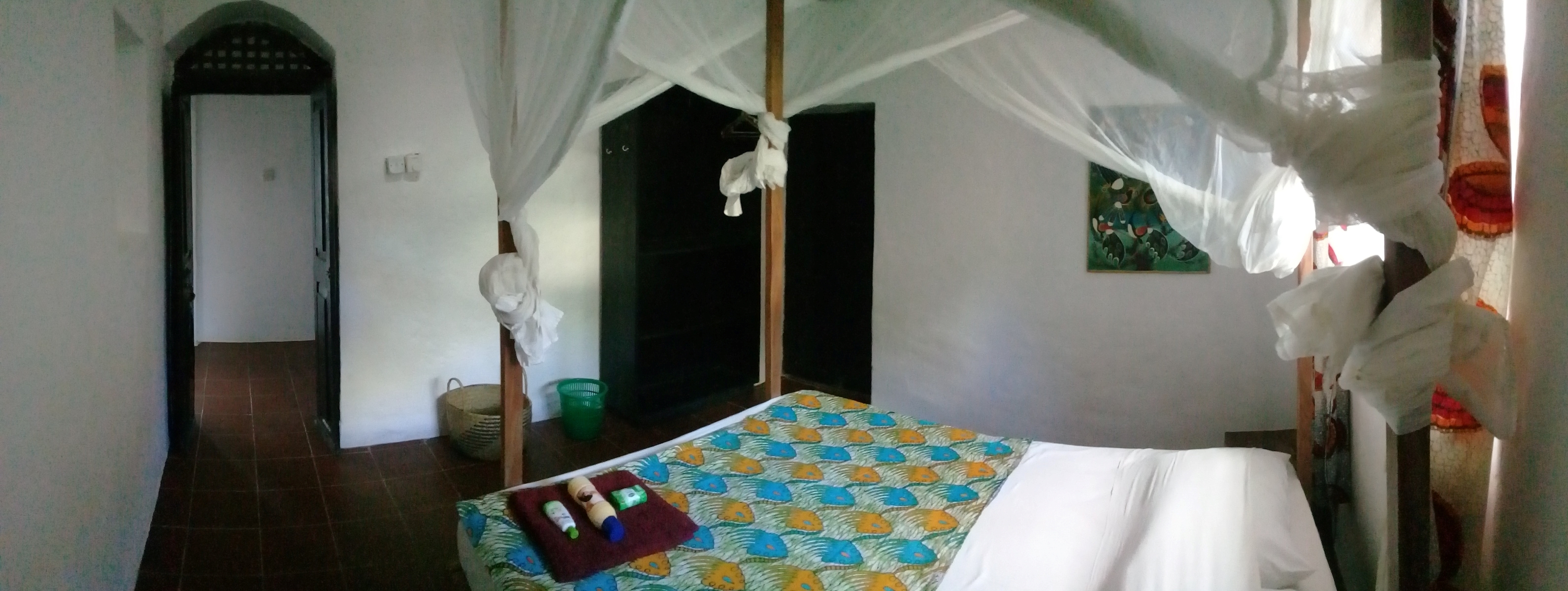
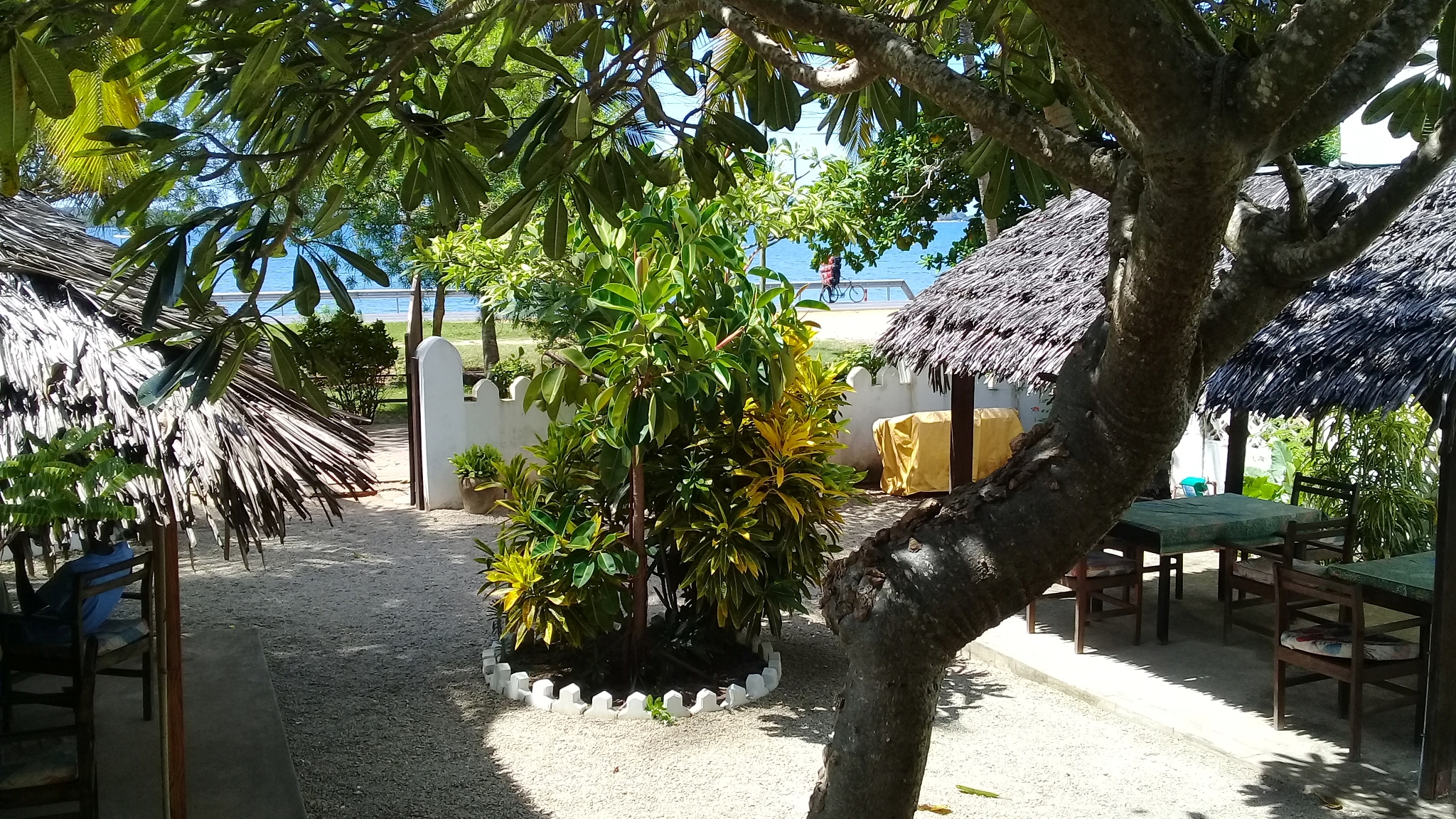
Volunteers stay at a guest lodge, conveniently located right next door to the dive centre, making it easy to move between accommodation and daily activities. The lodge is made up of two separate buildings. The first is a traditional Swahili-style guesthouse with four rooms sharing two toilets and two showers, as well as a comfortable outdoor common area for relaxing and socialising. The second building offers four self-contained rooms, each with its own private bathroom and terrace for added comfort and privacy.
All rooms are furnished with a large double bed, a mosquito net with a ceiling fan inside, a bedside table with a night light, and a cupboard for storage, ensuring a simple yet comfortable stay.
Drinkable water (bring a refillable bottle) and one laundry per week is included.
Wifi and weekend activities are at extra cost.
Volunteers are provided with two meals per day, breakfast and dinner, served in an open-air restaurant area composed of four gazebos. Breakfast typically includes fresh fruit juice, fruit salad, vegetable salad, chapati, and eggs. Dinner menus vary daily and may include rice dishes, curries, pizza, or burgers. Two evenings per week offer an optional chicken dish, while the rest of the meals are vegetarian.
Vegan and gluten-free diets can be easily accommodated.
The lodge offers a relaxed and friendly atmosphere, creating a comfortable home base throughout the volunteer experience.

Fees
That’s just USD 83 per day* for:
*In addition to the program fees listed above a Registration Fee is payable to secure your place. The registration fee is USD 299 for those volunteering with Love Volunteers for the first time or USD 149 for any subsequent volunteer placements. The registration fee includes: lifetime LV Alumni Membership, fundraising support & advice, dedicated pre-departure support, certificate of completion (on request), and exclusive access to the LV Trip Planner.
Some things are not included in the program fees listed above, such as flights, visas, vaccinations, travel insurance, additional foods and snacks, spending money, local transport, in-country trips and excursions, return airport transfer (unless mentioned above).
Please note that prices are subject to change without notice. Please ensure you have read the Love Volunteers Terms and Conditions & Refund Policy.
Additional Info
Important Visa Information
An ‘Ordinary Visa for Humanitarian and charity activities’ is required
to volunteer in Tanzania. It cost US$50 (US$100 for US-citizen) and can
be obtained either online or on arrival. Our local partner will issue an
‘invitation letter’ that you need in order to get the right visa. Please
ensure you have sufficient US$ to pay for the volunteer visa on arrival
(notes must be no older than 2009). The visa, which is valid for three
months, can then be renewed for a further three months if required.
Note: All travelers require return or onward tickets, all documents required for their next destination and proof of funds. Currently visitors arriving from infected areas must hold a yellow fever vaccination certificate.
Passport and visa requirements are liable to change at short notice. Travelers are advised to check their entry requirements with their embassy or consulate.